XOR
Society
A final manifest on compressed truth, lost provenance, and the discipline of constrained inference.
An output is not its history.
XOR Society begins with a modest mathematical fact: a deterministic system can produce a perfectly correct output while still refusing to reveal which exact input history produced it.
Forward computation and reverse inference are different problems. Knowing the input may determine the output. Knowing the output does not necessarily determine the input. The mistake begins when certainty in the forward direction is silently promoted into certainty about the past.
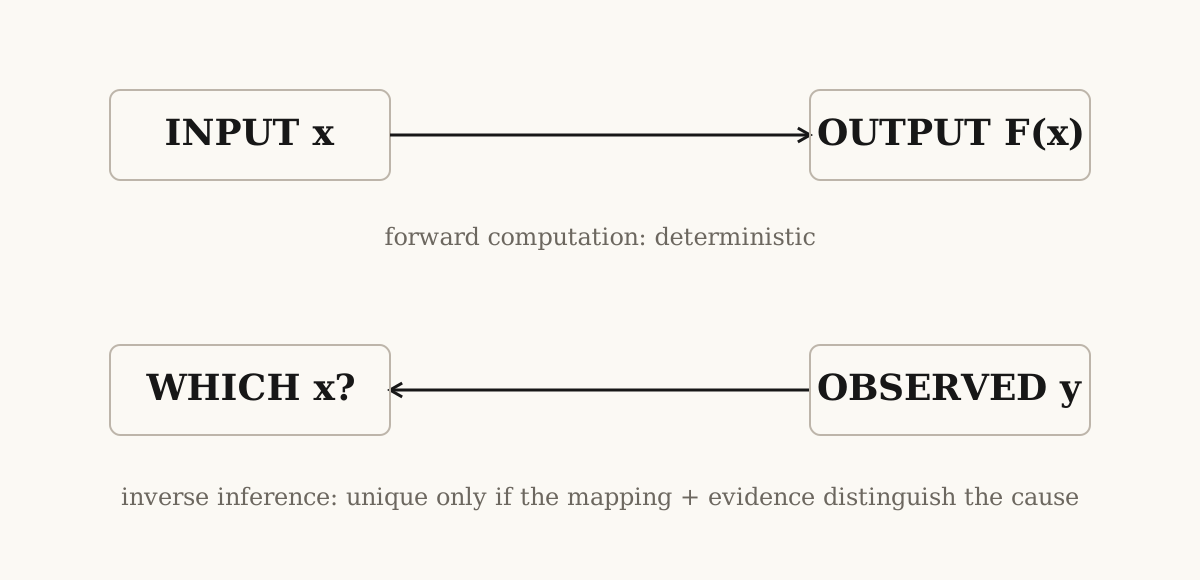
Correct output does not imply uniquely identifiable history.
The first loss is not correctness. It is provenance.
A two-input NAND gate makes the distinction visible. Its output is completely well-defined, yet one of its outputs has three possible antecedents. The gate is not wrong; the observer is simply not given enough information to reconstruct the complete input state.
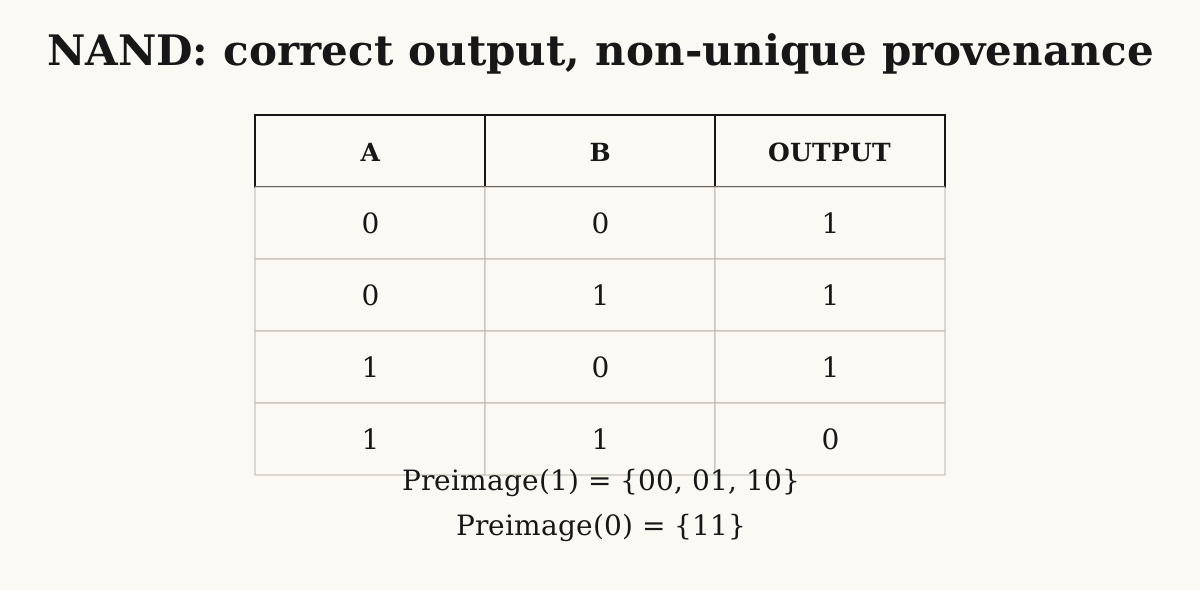
The consequence is epistemic rather than mystical: a symbol can be reliable while still being incomplete as evidence of its cause.
Every abstraction preserves something and hides something.
Modern computing is a tower of representations. Physical semiconductor behavior becomes transistor behavior; transistors become gates; gates become circuits; circuits become microarchitecture; instructions become software; software becomes human-readable decisions.
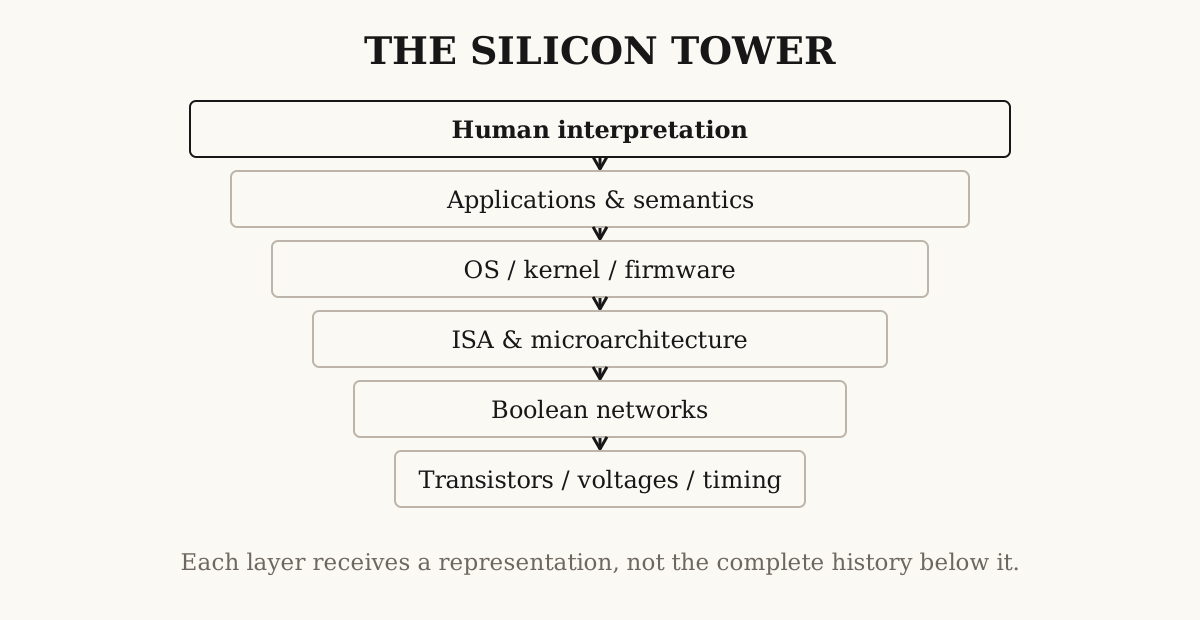
The conclusion is not that silicon is inherently untrustworthy. The conclusion is that an upper-layer symbol cannot, by itself, authenticate lower-layer information that was never preserved in that symbol.
Difference survives. Identity does not.
XOR is the cleanest emblem of the framework because it preserves parity while discarding orientation. It tells us whether two encoded values differ, but not which participant carried which value.
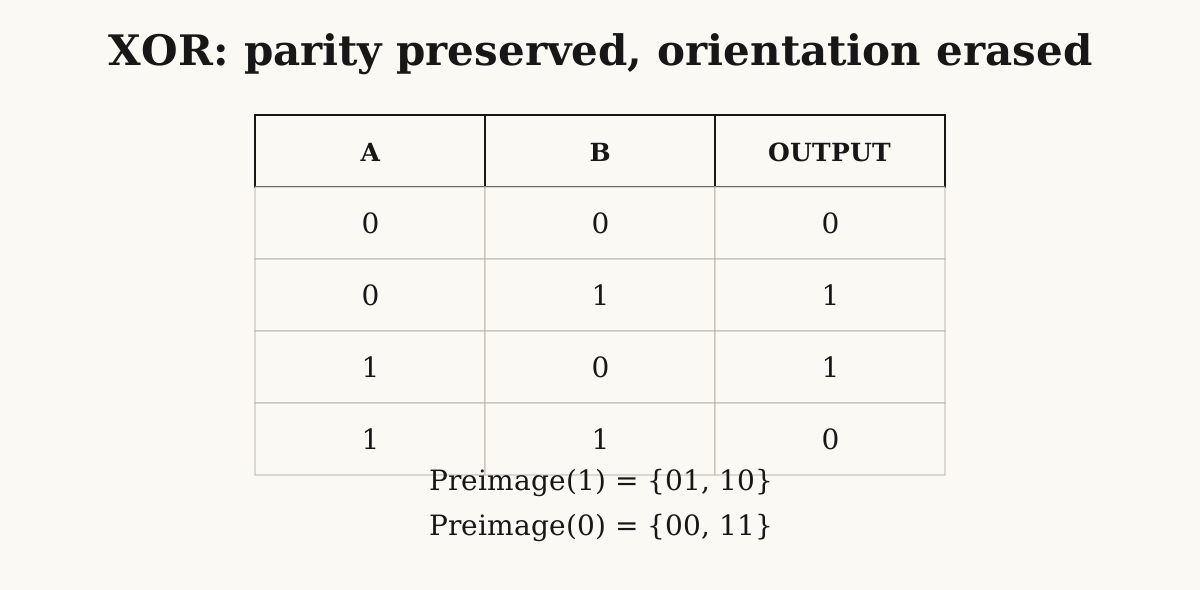
When XOR returns 1, we know the inputs differ. We do not know whether the hidden state was 01 or 10. When XOR returns 0, we know the inputs agree. We do not know whether that agreement was 00 or 11.
XOR reports difference without identifying its owner, and agreement without identifying its meaning.
A bit does not carry its own meaning.
The framework became clearer when signal value was separated from semantic truth. A logical 1 may mean success, error, closed, open, accepted, rejected, or anything else chosen by the encoding. The voltage does not contain the interpretation.
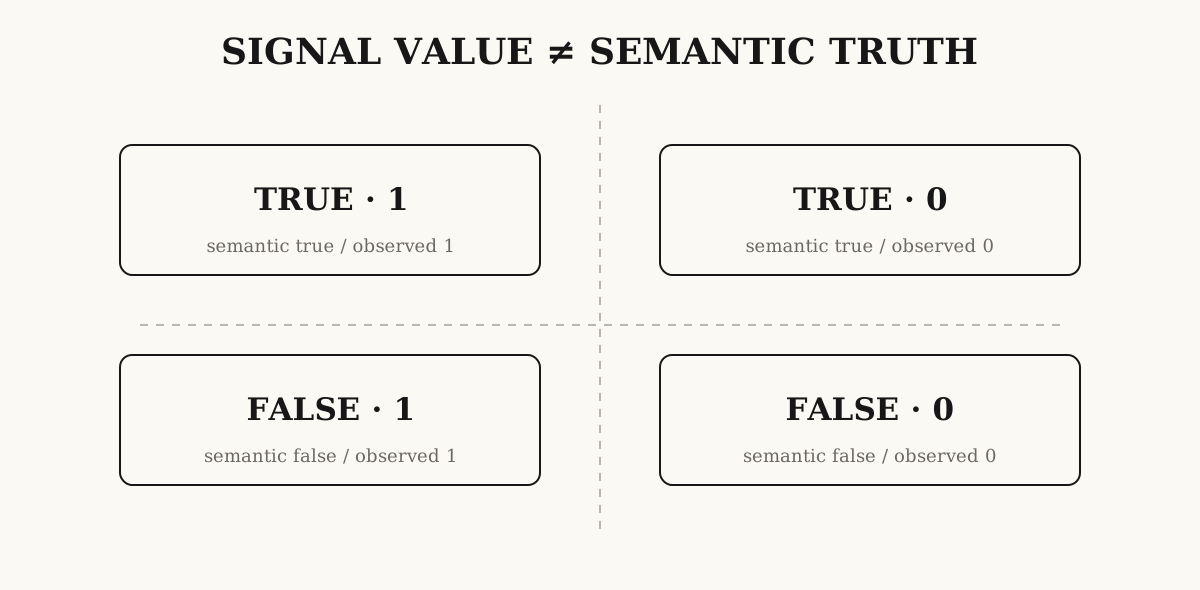
This distinction gives us four epistemic states: true-1, true-0, false-1, and false-0. It prevents one of the most common category errors: treating the visible bit as if it were already the truth of the proposition represented by that bit.
Consensus is not truth. Conflict is not adjudication.
Two people can agree and both be correct. They can agree and both be wrong. They can disagree with the first correct and the second wrong, or with the first wrong and the second correct.
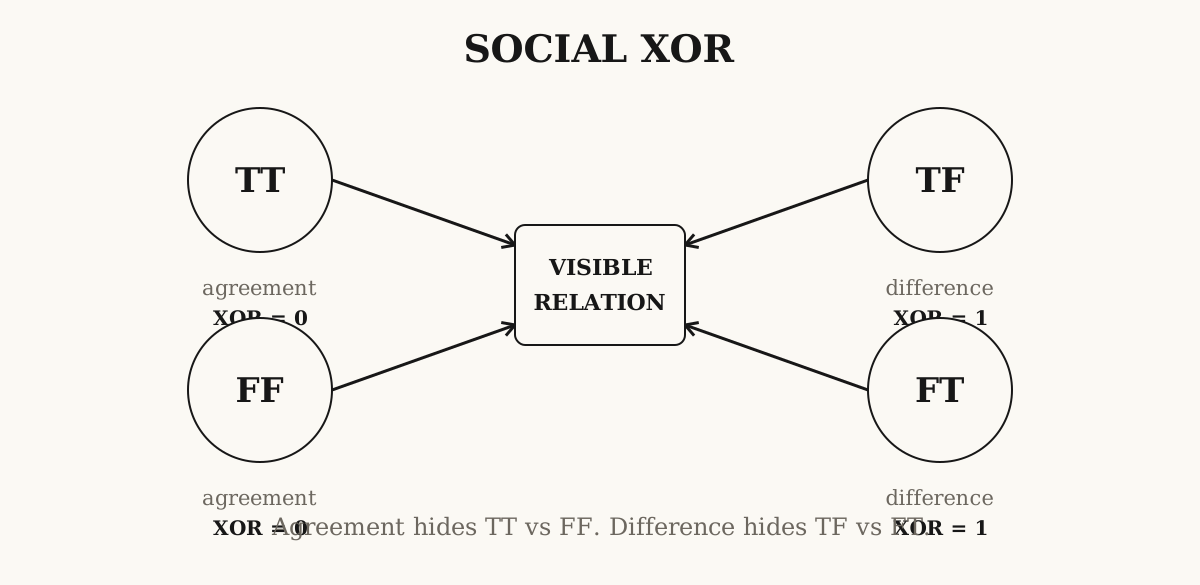
A society that observes only agreement or disagreement has learned something real about the relationship between two positions, but it has not yet learned which position is semantically true.
Repeating the same lost information does not restore it.
One early idea was to combine XOR with XNOR, hoping that a signal and its inverse would reconstruct the hidden inputs. It cannot. XNOR is simply the complement of XOR; it adds no independent information.
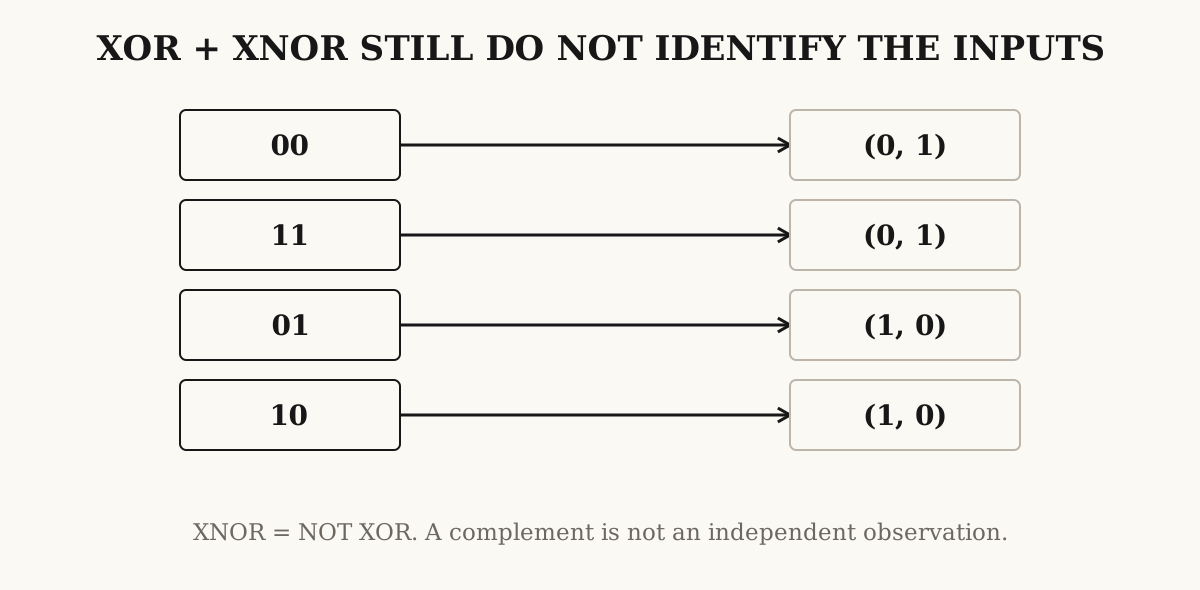
This failure became constructive. It forced a stronger rule: information lost by a many-to-one mapping cannot be recovered merely by transforming the same output. New information must enter from somewhere else.
A validator must bring an independent path.
The next step separated the visible signal from confidence in the interpretation. Confidence is meaningful only when it is based on evidence that is not merely a copy, inversion, or echo of the original signal.
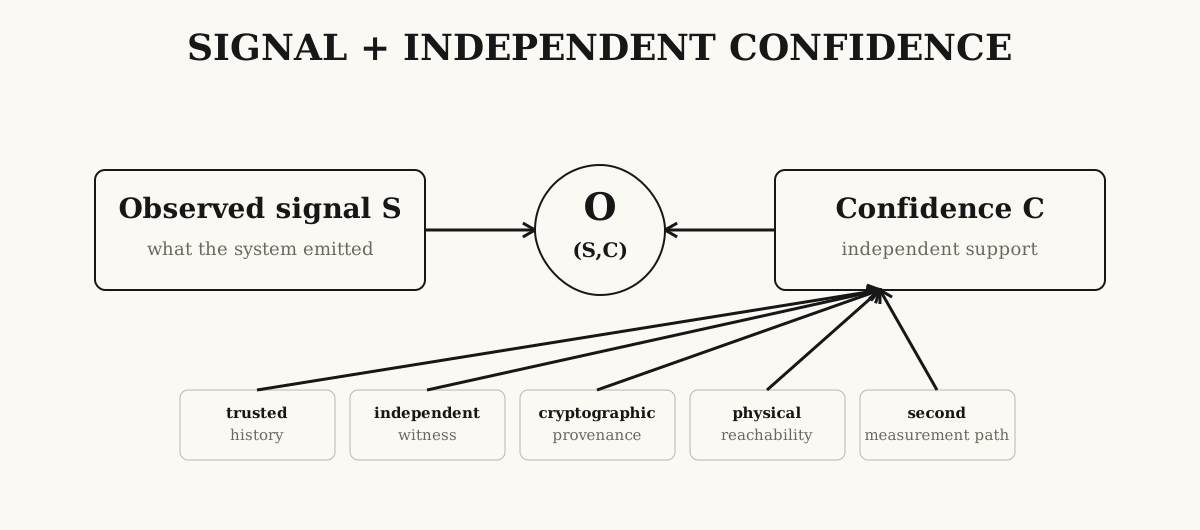
One thousand repetitions from one source do not automatically become one thousand independent confirmations. Confidence depends not only on agreement, but on the independence of the paths that produced it.
History can restore distinctions that a static signal erased.
A static observation may record only that two states differ. A temporal record can show what changed, what remained stable, what transitions were possible, and which candidate histories are inconsistent with prior trusted state.
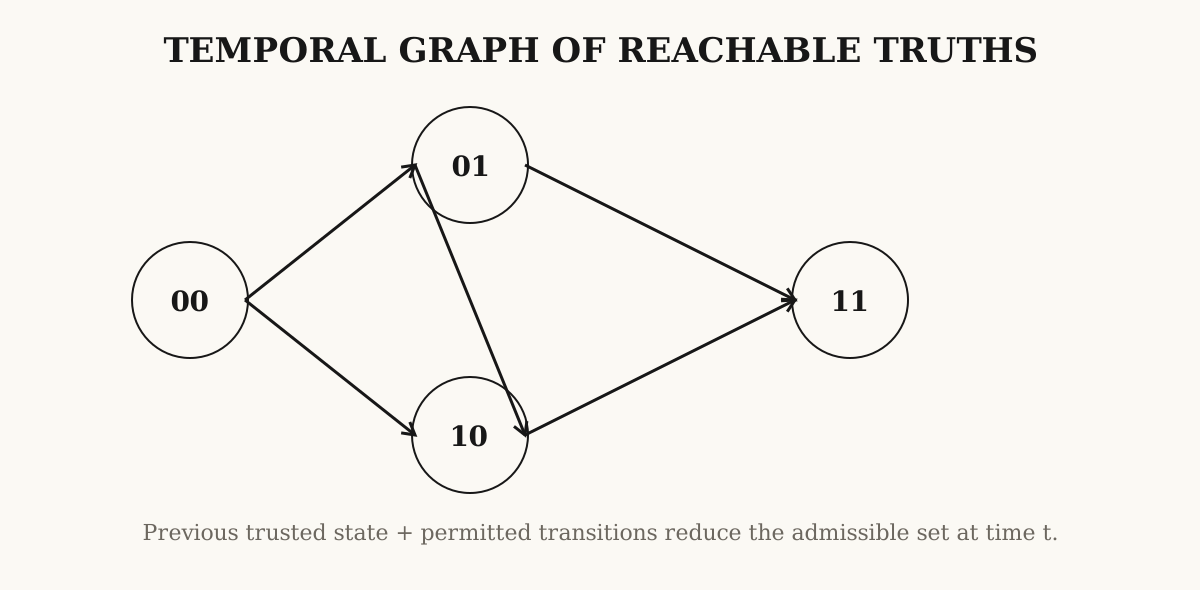
From this came the admissibility mask: the subset of candidate states that remain compatible with trusted history, physical possibility, authenticated provenance, policy constraints, and independent evidence.
The mask is not an ideology. It does not create truth. It is itself part of the trust base and must remain auditable.
Constrained inverse inference.
At last, the framework could be expressed without pretending that the lossy gate had become magically invertible.
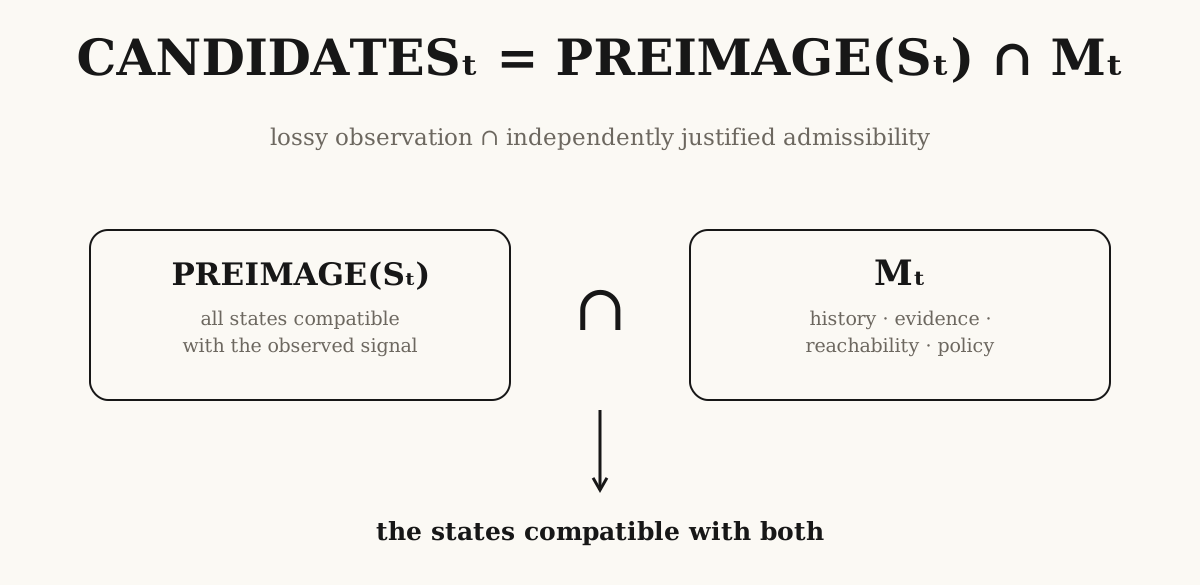
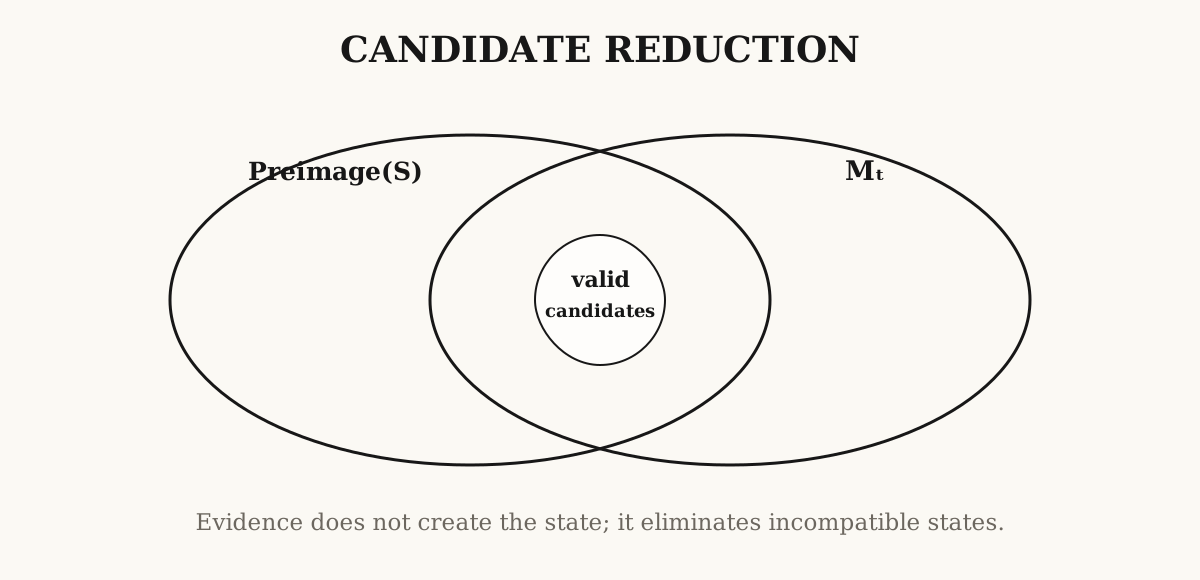
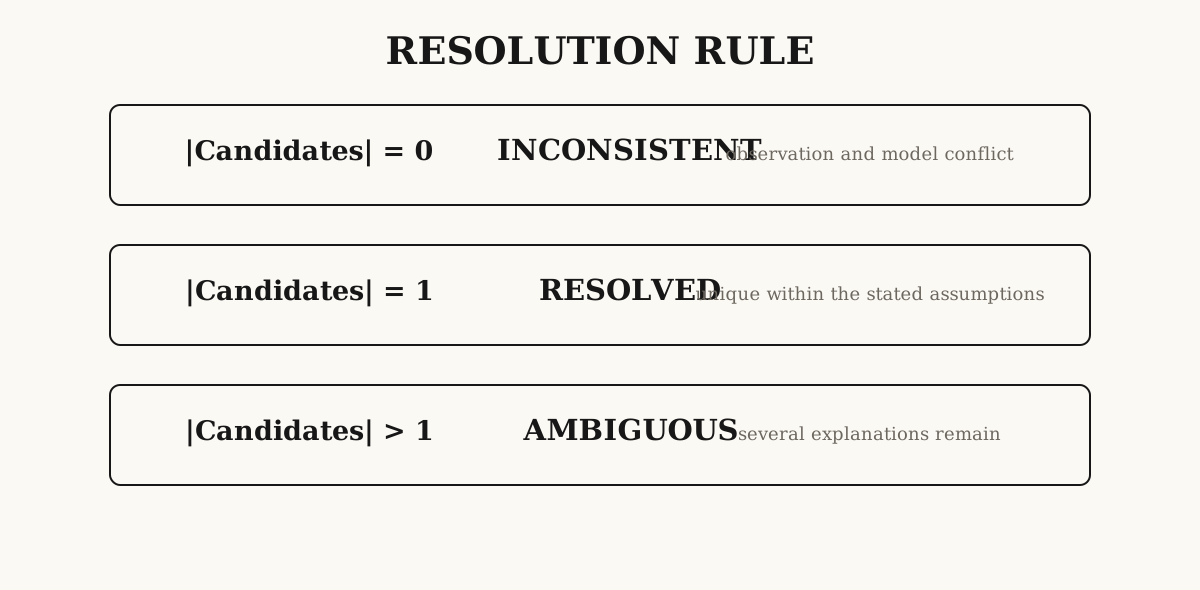
Three outcomes are legitimate. Zero candidates means the observation and model conflict. One candidate means the state is effectively reconstructable within the assumptions. More than one candidate means ambiguity remains.
The social error is forced uniqueness.
Human institutions also compress reality. They produce categories such as accepted or rejected, compliant or noncompliant, trusted or untrusted, guilty or not guilty, member or nonmember. Such outputs may be operationally necessary.
The mistake begins when the category is treated as a complete biography of the hidden causes that produced it.
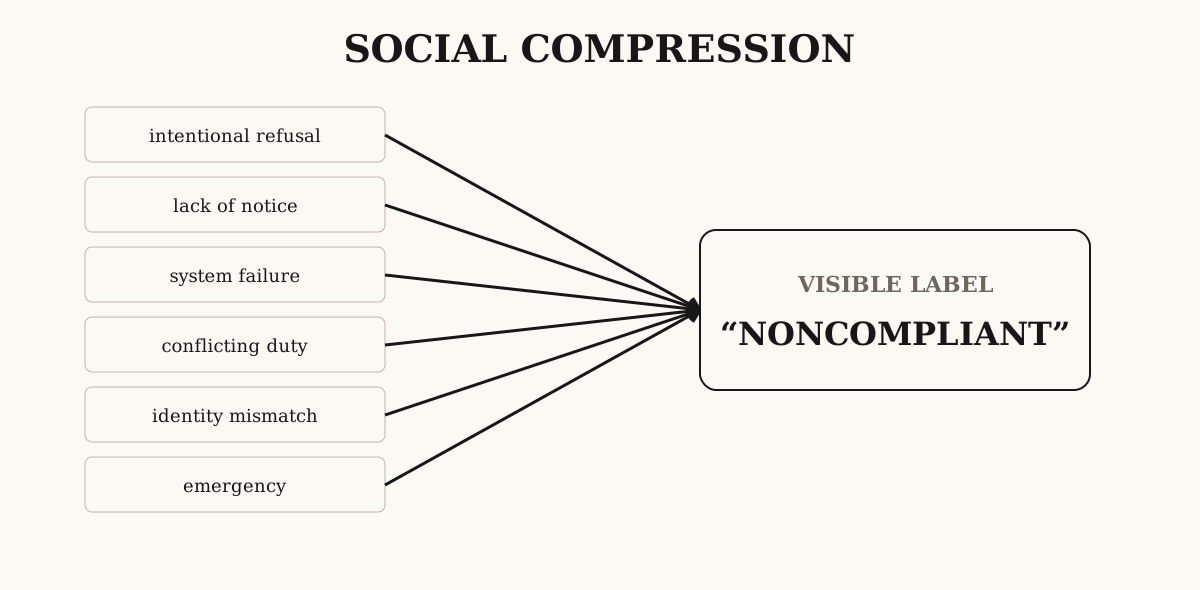
A system that has several surviving candidates but presents one story as uniquely proven has not discovered new information. It has silently discarded alternatives.
Preserve what the final bit cannot remember.
A trustworthy system should preserve who observed, what was directly observed, what was inferred, what alternatives were considered, what evidence eliminated them, whether the evidence paths were independent, when the state was observed, and what uncertainty remained.
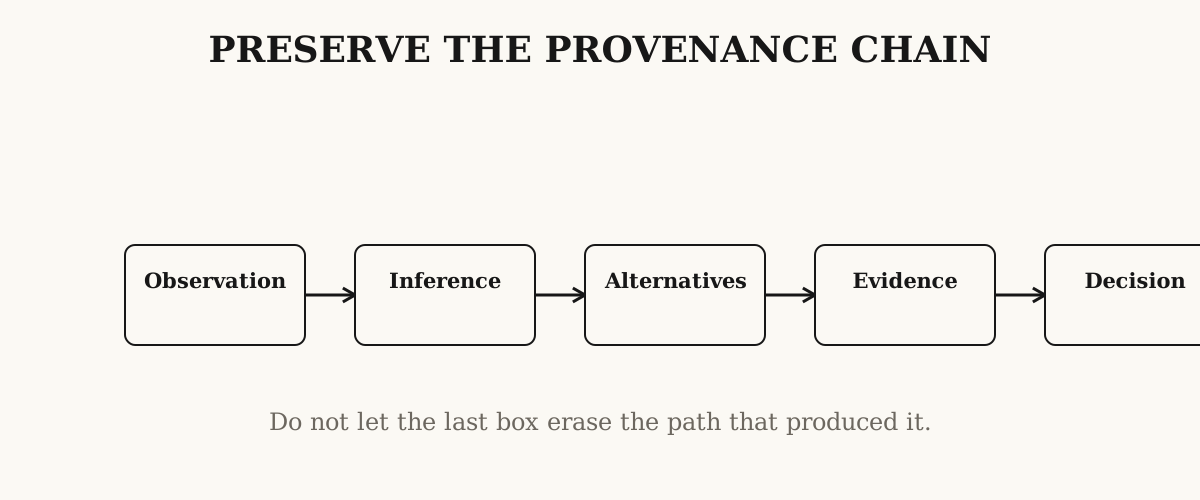
As consequences become more severe and irreversible, destroying this provenance becomes more dangerous.
This is not relativism, and it is not a claim of broken silicon.
There may be one actual physical history even when several histories remain compatible with the observer's evidence. The framework concerns the difference between reality and access to reality.
It does not say that every interpretation is equally true. It says alternatives should be eliminated by distinguishing information rather than by convenience, pressure, repetition, or the desire for a binary answer.
It does not say that NAND or XOR are defects. They do precisely what their Boolean definitions require. The warning concerns what an observer later tries to infer from their compressed outputs.
What remains after the machinery is stripped away.
An output is not its history.
Agreement does not establish truth.
Disagreement does not identify falsehood.
A repeated signal is not automatically independent evidence.
A binary decision is not a binary ontology.
A confident narrative does not shrink its own preimage.
The disciplined observer begins with every cause compatible with the evidence, introduces only genuinely independent constraints, and removes only what those constraints justify removing.
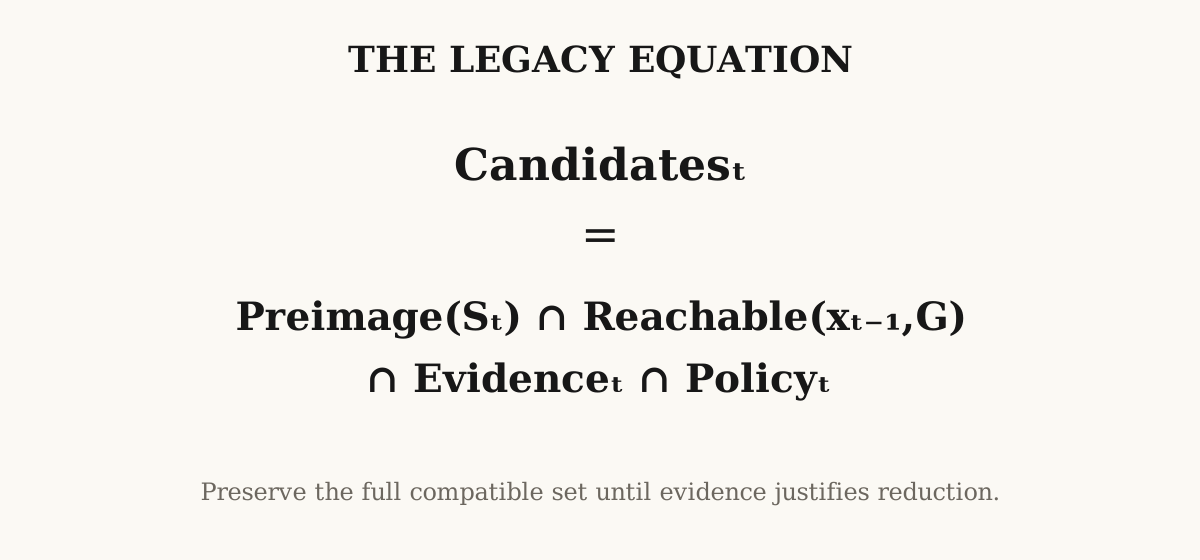
Neither silicon nor society should be asked to prove a unique hidden truth using an output that identifies only an equivalence class.